


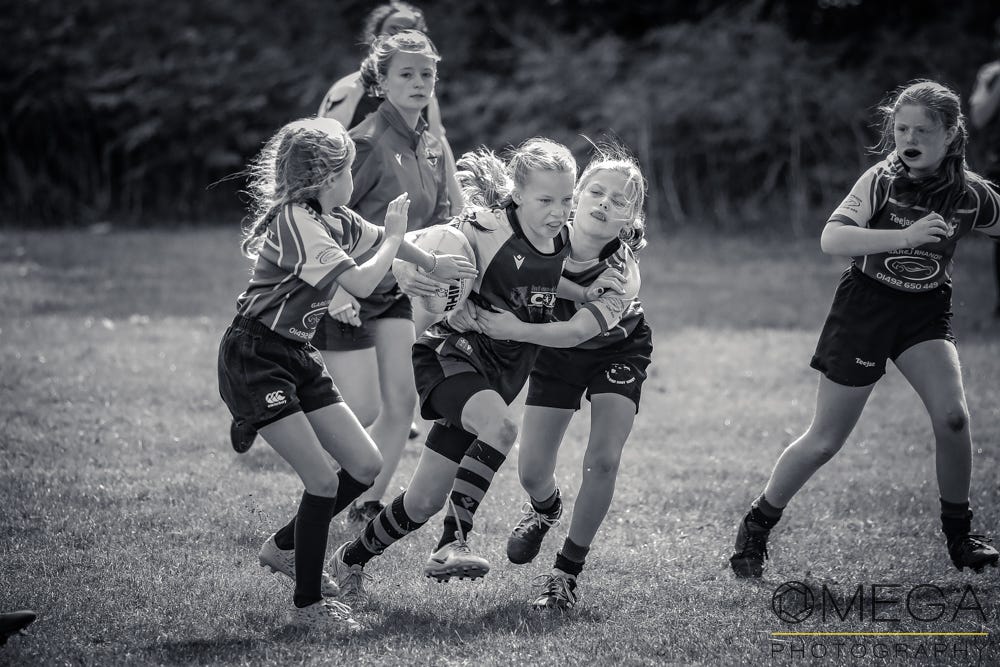
Summer 2025 was amazing for women’s sport in England. The Lionesses won the Euros and the Red Roses won the World Cup. However, girls aspiration rates have dropped.
This shocking news comes from Women In Sports’ latest research into girls’ dream rates. This is the latest report in work that has spanned 5 years.
The number of girls dreaming of being a top sportwoman has dropped, and the gap between boys’ dream rates and girls has widened.
Before we dig into possible reasons why, lets look at some stats:
Fewer girls love sport and take part in it already - down from 26% in 2024 to 16% in 2025.
More girls want to take part in more sport - 7 in 10 girls would like the opportunity to take part in sport.
Boys’ and girls’ dream rates have fallen, but girls are at an all time low - only 23% of girls dream about becoming a top sportsperson
The dream rates of girls who love sports has fallen sharply - 70% of girls ‘who love sport and take part in lots already’ dreamt of becoming a top athlete in 2024. In 2025 that fell to 52%.
77% of girls and 69% of boys believe women’s sport does not get taken as seriously as men’s sport.
I find these stats and the report shocking. However I am not suprised. I have feared for a long while that there are systemic failings that could risk disenfranchising women and girls from sport.
It feels like we have flooded the system with excited and inspired individuals and either given them no opportunity to explore sport or not equipped the environment and people around them.
It’s not a one solution fix. There have been vast improvements in facilities in the past few years across different sports. This is important. However, often the funds go directly to toilets or changing rooms without consideration of other facilities. What is the quality of kit a female team will get? What is the standard of the pitch they train on?
When speaking to experts about the different injury mechanisms in female players, they state that quality of equipment and training area is a factor. This is something Hannah Campbell and others have mentioned.
Beyond the facilities, other areas have been neglected. I would challenge the sporting sector and say that not enough resource (financial and people power) has been directed into coaching and coach education, with an aim of giving coaches female-centric tools to embed into their coaching practice.
This potentially means clubs and coaches are not properly resourced to coach women and girls. This is not to say that female participants should be treated as fragile or something alien, but in historically male-dominated sports many female considerations aren’t embedded within coaching practices or coach education.
Girls are noticing a lack of support across all levels, and their perception of the availaibilty of local opportunities has worsened.
Engagement with the Rugby World Cup
The Women in Sport research looked into the effects of the Rugby World Cup. It had a positive impact, girls felt inspired by the tournament.
However, it also made girls aware of the inequalities within sport.
Let’s dig into the stats:
74% of girls feel motivated to be more active and 64% are more likely to try rugby in the future.
80% of girls said watching the Rugby World Cup made them frustrated that rugby is not shown more often.
91% of girls said the World Cup would inspire more girls and women to play rugby
Barriers to playing are also a greater factor for girls. This information is not new to any coaches within W&Gs rugby. However, the research offers useful insight into those barriers.
Here are some of the blockers for girls who don’t currently play rugby:
36% of girls are scared they could get hurt or injured
30% say they don’t feel confident when trying rugby
Other barriers included perceptions around masculinity, body types and there not being enough girls only teams.
A lack of confidence to try is a major blocker for those who don’t currently play rugby. Introducing rugby via girls-only multisport sessions might be one way to help tackle this issue. Girls only opportunities in primary school is something I’ve run before and I’m also a believer in it. There is value is having a blend of mixed gender and single gender sessions.
Seeing women’s rugby treated equally was listed as one of the drivers of engagement that could aid girls. Other reasons included more girls only teams at school and outside of school, opportunities to learn rugby at a younger age, having more female coaches and having coaches that understand girls’ needs in rugby.
This returns to what I wrote earlier. Don’t get me wrong, having facilities that are relevant to girls was listed as a factor, but not as high as having a coach that understands them.
There needs to be a greater understanding that facilities that cater to W&Gs aren’t just toilets and changing rooms. It’s about access to pitches, the quality of the pitches, floodlights, having free period products in the toilets and changing rooms, ensuring the clubhouse is open for teams after training or matchdays, access to a club physio and ensuring the car parks or walkways are illuminated in the winter months.
We also need to look beyond improving access to facilities and invest in a coach development system that supports coaches of W&Gs and female coaches.
This needs to be informed by research and delivered in a way that allows coaches to embed female-centric ways of coaching into their practice. In my experience, this can be something that organically developed.
It doesn’t have to be something that’s clumsily bolted on. An obvious example is incorporating some of the contact activities from Contact Confident, a project that looks at female players and contact, into a coaching practice. This is something that can be added into a coach’s toolbox and adapted over time to suit them and the players.
Here’s some examples of how I approach it:

Other possibilities include giving coaches more exercises like Activate to help with players’ ACLs or pelvic floor, with suggestions of how to add them into a session. All so a coach can use them in a way that feels natural, exploratory and exciting for them and the players.
Around 2 million girls say they would play rugby if offered the chance. (19% said yes to contact rugby and 25% said yes to non-contact rugby). The challenge is creating an offer that is right for them and supporting the individuals in the rugby ecosystem so that the girls love rugby for life.
Did you know there’s a subscription option for Coaching Care Creativity? Nothing is behind a paywall so your subscriptions or coffee clicks can help keep the content going. The subscriptions are £5 a month or £50 for the year. You can also buy me a one-off coffee for just £5.