


What are the shields?
The Raeburn Shield and Utrecht Shield are lineal titles. It is essentially: ‘winner stays on’, on a global scale. Beat the holder and you take the prize off them.
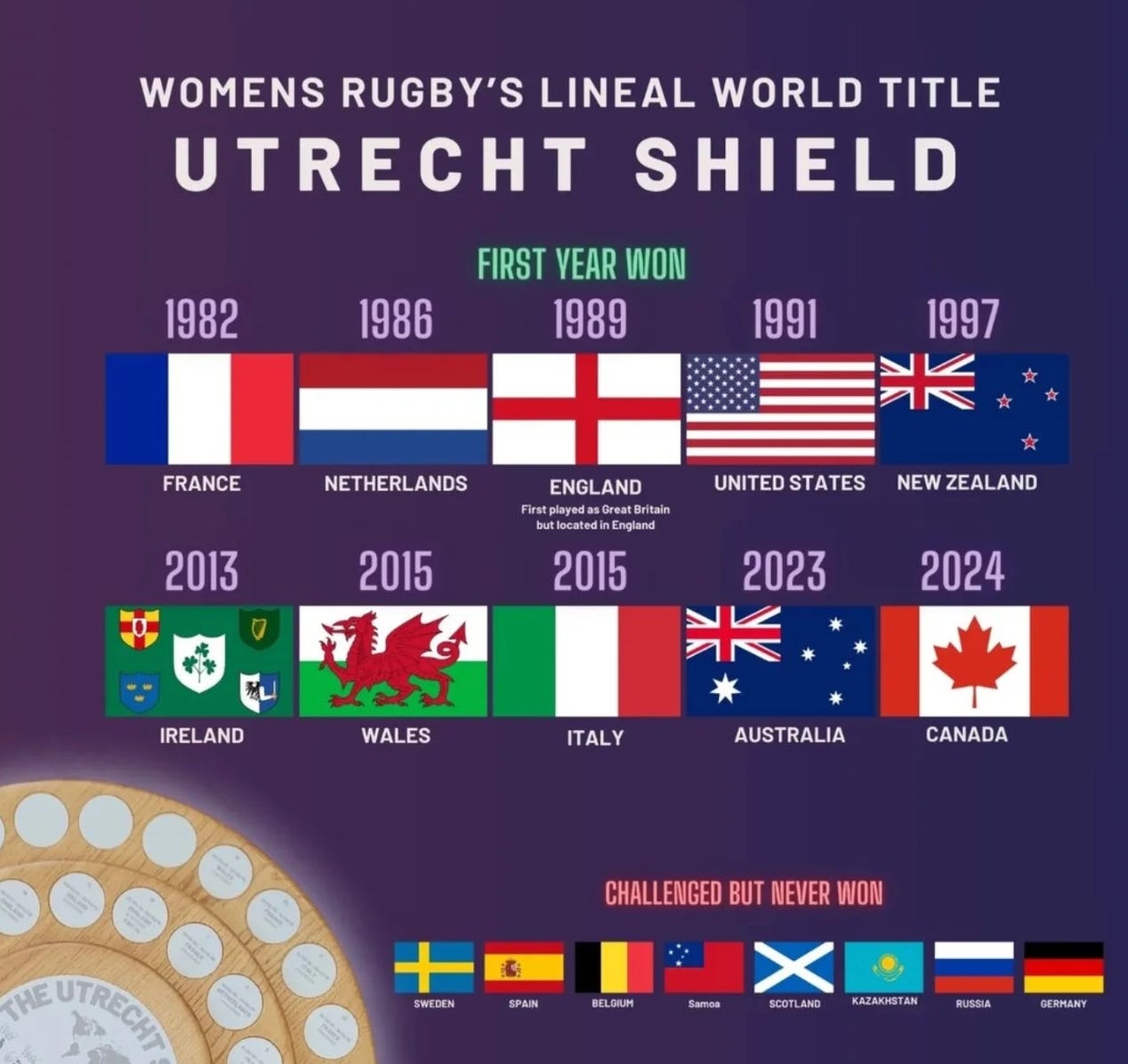
In 1871, there was the first ever international, Scotland beat England at Raeburn Place and become the first holder of the men’s title. In the women’s game, France beat the Netherlands in 1982, in Utrecht, and become the first holder.
Whoever beats the holder takes it. If you’ve got it, you defend it every single match, home or away, and the next team to beat you takes it off you. It’s playground rules applied to the entire history of international rugby and I just think that’s brilliant fun.
The work started in 2008 with a group of rugby nerds online talking stats after New Zealand had lost the World Cup. We were all messing around with the idea of what if rugby had a winner stays on title.
It was one of those daft internet conversations that probably should have died there, but I looked at it and thought that it could genuinely add something to the game. Everyone else drifted off eventually and I just kept carrying it.
The shields are fan driven. It wasn’t created by a sponsor or a governing body trying to manufacture a product. It came from people who genuinely love rugby. And honestly, that’s why I think it resonates.
I also think in decades rather than years. Long after I’m gone there’ll still be rugby fans arguing over who’s going to take the Shield next, and I really love the idea that I helped add something lasting to the game I care about.
The history of the game
Tracking the titles doesn’t necessarily tell you who the best team in the world is. What it tells you is who took their opportunity when it came. That’s the bit I really love.
You get these moments where maybe a side isn’t the best team overall, but for one day they rise up and take the title. Over time the great teams still tend to emerge because it’s incredibly difficult to hold onto these things for any length of time. You just have to keep winning.
Fans live on stories. Rugby is built on stories and meaning and little moments that become part of the game’s folklore. The response online has shown that massively.
People instantly understand the jeopardy of it. Suddenly a match has this extra layer where one result can completely change the direction of the title. That emotional hook really lands with people.
At one level it’s just data and results. It’s basically an algorithm. However, what I’m actually trying to do is tell stories and create a narrative thread through the history of rugby.
I can connect players from over a hundred years ago directly to players today through the same title. In the women’s game that’s especially powerful because I can connect today’s players directly back to the trailblazers from 1982 who played in that first international and who are still around to engage with and celebrate.
There’s something quite magic about that. It’s like this hidden layer of rugby history that’s always existed, we just hadn’t surfaced it properly before.
Why does it matter?
The shield adds meaning without changing the game. You don’t need extra fixtures or you don’t need another tournament. The shield adds a new layer onto matches that already exist. Every game suddenly carries jeopardy. If you’re the holder, you’re defending a global title every single time you step onto the pitch.
In New Zealand (my home), we have the Ranfurly Shield in domestic rugby. People talk about “shield fever.” It completely changes the atmosphere around matches.
There’s this sense of “you’re not taking this off us,” and equally for the challengers it’s this huge opportunity because you might only get one shot to take it.
That same magic exists with the lineal titles. One game, one chance, and suddenly you can become world champions. Fans absolutely connect with that because sport lives in those moments.
History of the Women’s Game
The women’s game has this really unique birth story because it’s modern enough that many of the players who started that journey are still around. That’s incredibly special. You can directly connect today’s players and fans with the people who built the foundations of the international women’s game in 1982.
The Utrecht Shield creates this continuous thread through all of that history. It gives us a way to celebrate the trailblazers, connect generations together and surface stories that maybe haven’t always had the recognition they deserved. That’s a really powerful thing for growing the game, because history and identity matter.
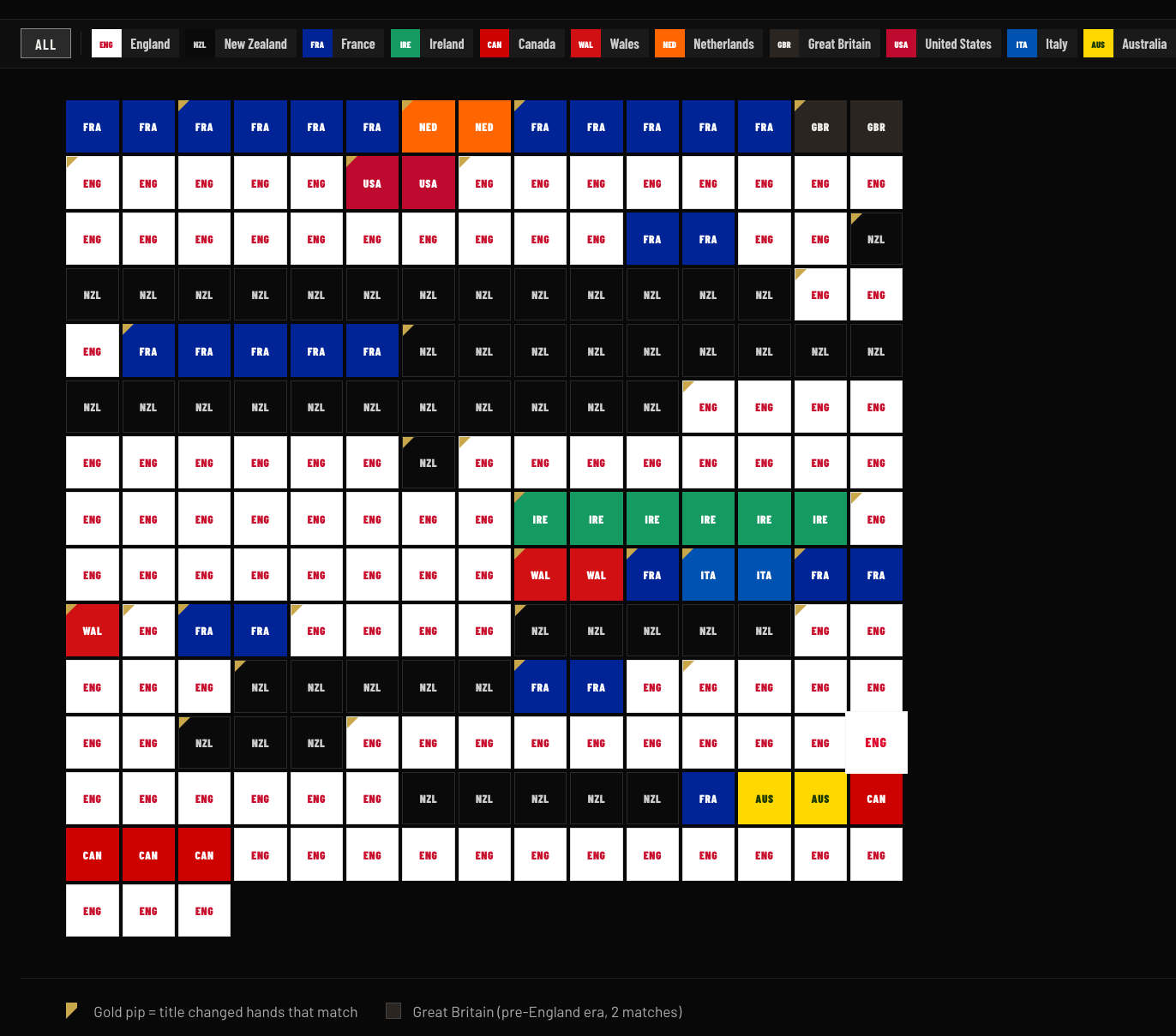
There are some brilliant stories and facts. The Black Ferns held the Utrecht Shield for 20 straight matches between 2002 and 2009 which is just ridiculous dominance, especially when nobody even knew the concept existed at the time.
South Africa held the Raeburn Shield from 1937 until 1953, although there was a world war in the middle and they only played 12 matches. Romania were effectively world champions for a period in the 1980s which is one story people always love.
One that still feels wild to me is that Canada never held the Utrecht Shield until 2024 despite having some incredible teams over the years and being such a major force in women’s rugby. There are also little quirks in history like Great Britain briefly holding the title in the women’s game before disappearing entirely. I actually love those strange bits because they reflect rugby history exactly as it happened.
I took the Utrecht Shield back to Utrecht in 2022 for the 40th anniversary of the first women’s international. That was incredibly special. We got the shield into the hands of players from that original 1982 match, and suddenly this thing stopped feeling like an idea and became real.
Since then I’ve become quite cheeky about sneaking it into places it probably shouldn’t be. During Rugby World Cup 2025, I got it into the Brighton stadium and into Ashton Gate for the semi-finals.
We actually got it down into the stadium bowl during the England versus France semi-final and even managed to get it into a BBC photo from the day, which made me laugh quite a lot. Those little moments are brilliant because you can see people instantly connect with it.
How could the sport tell it’s stories better?
I think rugby sometimes gets too obsessed with four year cycles and building towards World Cups. Obviously the Rugby World Cup is the pinnacle and should absolutely be treated that way, but there’s room for more stories alongside that, not fewer.
Sport lives in moments. A single upset, a single challenge, a single chance to take something off somebody.
Teams can do more to embrace those moments and connect the stories of players and generations together. Fans don’t just connect with trophies, they connect with narrative and emotion and jeopardy. The more rugby leans into that side of itself, the stronger it becomes.
For grassroots clubs and teams: just give people narratives they can grab hold of. The beauty of the Shields is they don’t ask for more rugby or more pressure on players, they just add significance to what’s already happening.
If clubs and teams can surface those stories better, people naturally buy in because humans love stories far more than they love fixture lists.
Check out the Utrecht Shield and the stats
Did you know there’s a paid subscription option for Coaching Care Creativity? None of the regular content is behind a paywall so your subscriptions or coffee clicks can help keep the content going. The subscriptions are £5 a month or £50 for the year. You can also buy me a one-off coffee for just £5.
Click the links below to buy me a coffee or upgrade your subscription