


Buying me a coffee (starting from £5 or purchasing a subscription helps to keep the work going and means important topics can be discussed, shared and explored. Your support is much appreciated, whether you share, buy me a coffee or purchase a paid subscription
Sport has the power to boost mental and physical health. Women and girls are faced with pressures about how they look and face gender-based health inequalities throughout their lives. Sport can be a way to combat some of this. However, these same pressures can present barriers that prevent people from accessing and continuing with sport.
The latest research from Women In Sport looks at these barriers and some shocking stats (less than half of girls meet the recommended levels of physical activity). There is a need for more opportunities for women and girls to try different sports and for more female teams (at clubs and at schools).
Mixed opportunities
For many sports, including rugby, mixed-gender opportunities are found at the mini and junior age groups. This means that for many girls, their first potential introduction to a sport is within mixed-gender offerings.
Women in Sport looked the opportunities for girls, including mixed-gender options for participation:
27% of opportunities in contact sport are for girls only
7% of opportunities in individual sports are for girls only
20% of opportunities in boy dominated sports are for girls only
The report from Women in Sport highlights that most sporting opportunities for children and young people are listed as mixed. The report mentions that whilst mixed-gender offerings are open to boys and girls, it does not mean that all girls will experience it the same as boys.
There are multiple benefits to mixed-gender participation including building positive communication, teamwork and normalise female participation. The research also shows that for girls who are the most skilled and competitive, they often find mixed-gender environments rewarding.
However, Women in Sport are keen to stress that those girls are not immune from sexism and stereotyping.
The report matches up with a lot of second-hand stories and experiences that I hear about in Rugby Union. People have told me stories and fears about girls who have thrived within mixed-gender rugby and the move to girls-only rugby.
I also hear a lot of stories about girls who are struggling in the latter years of mixed-gender rugby, they’re often left out and not being passed the ball. This act of bullying is supported within Women in Sport’s report:
32% of girls have experienced being teased or bullied by boys whilst playing sport
27% of girls said teasing or bullying comments had put them off playing sport altogether
Due to the lack of sporting and movement exposure girls have in their early years, compared to boys, mixed-gender sports can often expose a skills gap. This gap can be worked on, however Women in Sport found that this doesn’t often happen within mixed-gender environments. Instead there is an uneven playing field created through the session design or practice.
This, therefore, is a call for coaches working within mixed-gender environments to consider how their practice design can create equal opportunities and challenges for all players to stretch and develop.
How are you creating opportunities for everyone to be stretched? How do you incorporate this into your practice design?
There also needs to be a re-framing of what constitutes ‘winning’ or what ‘best’ means. A narrow framing of hitting a ball the hardest or putting the most points of the board is exclusionary. This is not to say that girls don’t value being able to hit a ball hard or aren’t competitive.
However, there are ways to create competition without a win/loss mindset so that everyone gains from being involved. A win/loss environment can enable bullying (of everyone, not just girls). An environment which recognises the value of different skills (physical, tactical, technical, mental) can help to reduce the potential of bullying.
How do you place value upon the different skills? How does this show with your actions and your practice design?
Mixed-sport opportunities can have a range of benefits for boys and girls. In order for this to happen, Women in Sport suggest that the sessions and offerings must be designed and delivered with girls’ needs at the forefront.
There also needs to be more girls-only sessions and opportunities. A lack of girls-only sessions place a barrier to activity to girls from diverse ethnic and cultural backgrounds, who may want/need girls-only spaces due to cultural, religious or preferential reasons.
1 in 6 sporting opportunities for children and young people in England are girls only.
Girls-only activity spaces can provide a safe space for participants to be social and enjoy skill/movement development, often without the bullying that can occur within mixed-gender environments. Women in Sport mention that some studies have shown that girls are more physically active within girls-only sessions. The study also shows parents are frustrated by the inequality that can occur within mixed-gender environments, by the lack of value placed on girls sport and want more girls-only options.
Some thoughts
It’s clear girls-only opportunities can more easily create environments for girls to thrive physically and psychologically. The research also shows the benefits that mixed-gender opportunities have for boys and girls, however this needs to be well designed and delivered. Mixed-gender sports should not be the only way we educate boys and girls participation should not be solely seen as a cure for sexism.
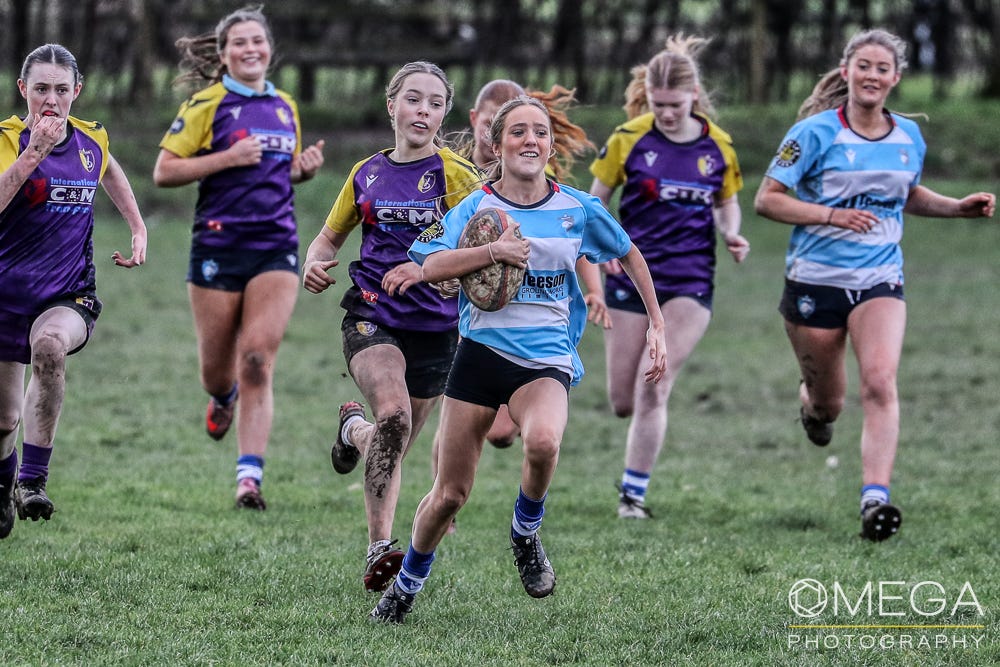
There is a potential balance emerging within rugby union in England. Mixed-gender rugby exists until U12s when they split. However, prior to this U12s bracket, I hear stories of girls not getting passed the ball. I also hear stories of girls loving mixed-gender rugby and then not enjoying a girls-only environment because it feels like a regression for that child.
This, to me, reaffirms a need to invest within girls-only environments and the coaching within it. In rugby union, there’s been a push to create more girls-only experiences and opportunities at the younger age groups alongside the mixed-gender ones.
We need to support the coaches that deliver across these environments. Coaches need the tools to feel confident to support a range of abilities and confidences. This gives girls the choice to play sport in an environment where they feel supported and comfortable.
Alongside creating better mixed-gender opportunities, consider how you can create more girls-only opportunities at the younger ages at your club, as well as the teenagers and young adults.
It’s clear that an exclusionary environment within mixed-gender sports will exclude girls and others. By thinking about ways to create inclusive practices, you will include girls and everyone.
In the next few weeks/months, I will be sharing some ways to create inclusive environments within practice design so that everyone can be supported and challenged.
The report highlights some case studies which are well worth checking out
Don’t forget there’s two Whatsapp groups to chat and connect with fellow coaches and sportspeople:
Female Coaches Whatsapp

Subscribers (of any gender) Whatsapp

Did you know there’s a paid subscription option for Coaching Care Creativity? None of the regular content is behind a paywall so your subscriptions or coffee clicks can help keep the content going. The subscriptions are £5 a month or £50 for the year. You can also buy me a one-off coffee for just £5.
Click the links below to buy me a coffee or upgrade your subscription