


My role is Periods in Sports Lead for Freedom4Girls. When I started at Freedom4Girls 2 and a half years ago, I wanted to share my passions of sports and activism to develop a periods in sports campaign.
I had seen and experienced how menstruation can be a barrier to physical activity and staying in sport and wanted to use the knowledge and resources we have at Freedom4Girls to tackle this problem across all ages and groups.
It started off with the development of the period friendly sports guide which provides simple guidance to clubs and individuals on how to make their clubs, class, or session period friendly. It has since developed into a wider campaign which I am very proud of.
Who are Freedom4Girls?
Freedom4Girls are a period poverty charity. Our wonderful CEO Tina started off working in Kenya and then when she returned home to Leeds started work here and we’ve since expanded to Leicestershire as well as one off events all round the country.
We believe that period poverty is caused 3 factors that we call the toxic trio:
Lack of access to products
Lack of education
Shame and stigma.
All of our work is focused on tackling these 3 areas and ultimately ending period poverty. When people hear period poverty they often only think of not being able to access products, but we want to show that period poverty covers so much more than that and that it’s likely that everyone has or knows someone who have experienced it.
We want to empower women and menstruating people to understand their bodies and their cycles and ensure they always have access to the period products that are right for them.
Keep Her in the Game
Keep Her in the Game is our latest periods in sports campaign. It is a pledge by sports clubs to commit to reducing the numbers of girls who drop out of sports because of their periods.
1.3 million girls in the UK alone have dropped out of sport in their teenage years and over 70% avoid sport all together during their period due to pain, leaks or embarrassment.
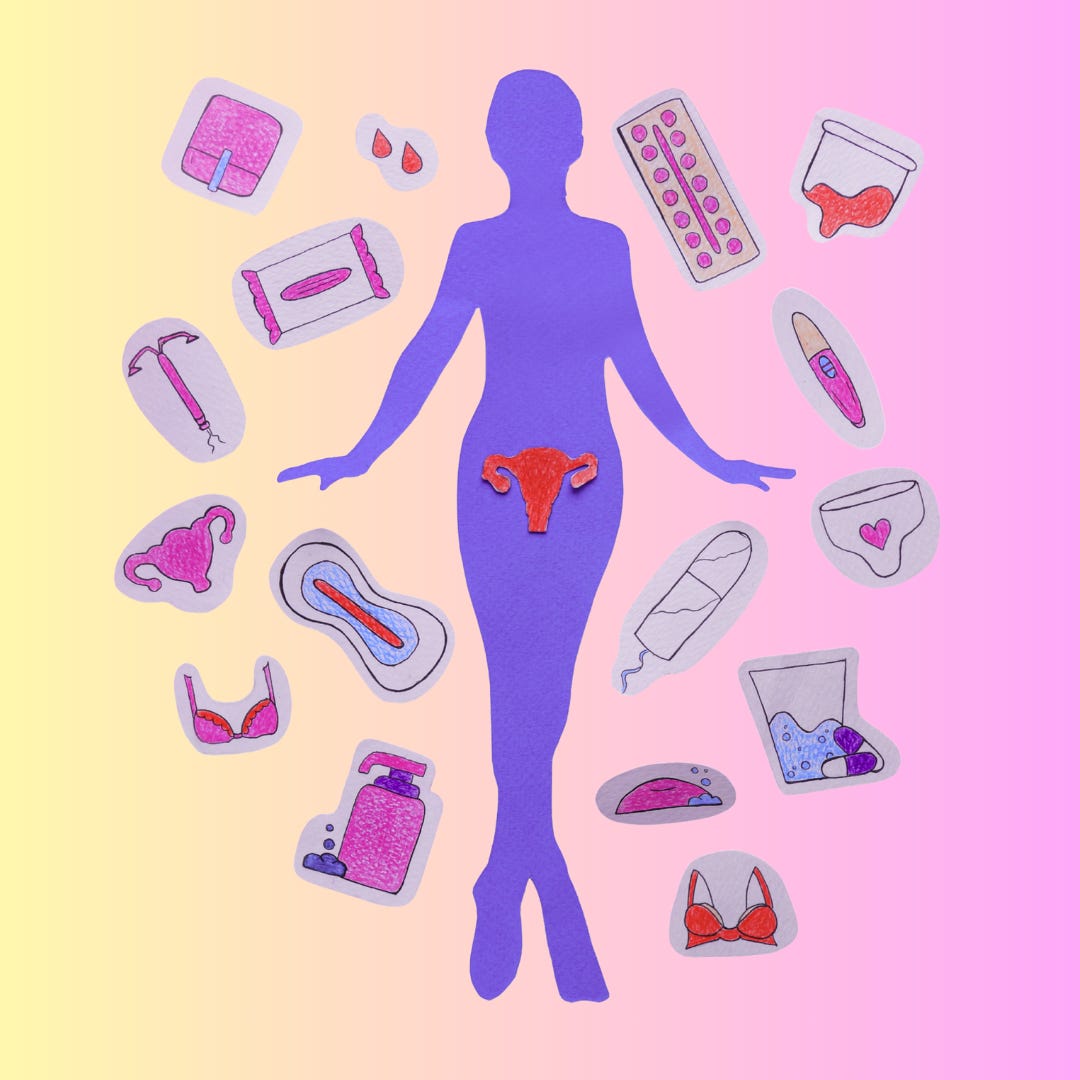
To help support this pledge we provide clubs with a variety of free period products such as pads, tampons, period pants and menstrual cups to ensure everyone has the product that is right for them.
We also offer training for coaches around the menstrual cycle and how certain symptoms may impact participation and performance. We know that everyone’s cycle is unique, thus one persons experience may be entirely different to another so we try to avoid being prescriptive ie only do this in this phase.
However, we want to acknowledge and educate on how people may feel and respond at different times of their cycle and how to get the best out of our bodies physically and mentally across each stage.
We also want to tackle the shame and stigma and make periods something everyone feels comfortable talking about no matter the environment they are in, whether that be at school in PE or at their local netball, rugby or football club.
We know the vast positive impacts that sports can have on our physical and mental health and we want to be a part of reducing barriers to access and encouraging more women and girls to start and stay in sport.
Advice for coaches wanting to keep girls engaged in sport
My advice for coaches is to be educated on the barriers to sports for girls and be comfortable and respectful when engaging in conversations about these barriers.
If you can’t engage with them and talk about what’s stopping them from playing without awkwardness or judgement, then you can’t help or retain them.
Make sure your club is inclusive to all. This isn’t just about having both a men’s and women’s team, but understanding the needs of the team and the individuals.
It’s about not having white shorts and making sure there are adequate toilet facilities, it’s calling out misogynistic language and ensuring that every player is respected, regardless of gender.
Lastly, be enthusiastic and respectful about all sport. Be considerate of the language you use when describing men’s vs women’s sport and treat them equally.
Period poverty in sporting environments
Period poverty shows up differently in different environments. For example: at your children’s grassroots football club, it may be having people who can’t afford products or having children who start before they’ve had a lesson on it.
It can also show up differently in clubs for older people or elite environments where finances may be less of a barrier.
It is often about the shame and stigma that surrounds menstruation and menstruating people’s experiences. I remember going to mixed team training at my university, walking in chatting about being on my period to my friend and being told by the captain that that wasn’t appropriate to be discussing.
I remember being told that having period products available in the kit bag was unnecessary, despite being aware that many people were struggling financially. A friend was told she was making up excuses for underperforming by saying she was struggling with her period (she had suspected endometriosis).
Reducing the stigma
There is often a lack of understanding or empathy surrounding periods and menstrual health conditions as women and menstruating people are just expected to get on with it and ‘jog it off’
It’s incredibly complicated as we are only now starting to see open conversations around periods and sports and we want to avoid slipping into a narrative that periods make us less capable.
It’s about trying to find a balance between letting women and girls know that championships and races have been won on every day of the menstrual cycle and not to let periods be a barrier; whilst also empowering women who are struggling to connect with their bodies, break down the internalised shame and stigma around periods.
We want people to use the knowledge and research we do have to improve their menstrual and sporting experiences though things like eating in flow and switching up their period products or contraceptive options.
Celebrating impact
We have so many incredible and emotional conversations every session we deliver and it’s often hard to quantify the impact that we have outside of simply how many products we’ve delivered.
Whilst this is obviously important, I think the work we do to educate and support menstruating people is just as important but harder to explain in terms of impact.
One story I always share is when I was leading of my first ever session with Leicester City in the Community 2 years ago. We were chatting about our experiences of periods and what products we used and one women got really overwhelmed and uncomfortable as this was the first time she’d ever been in a space where periods where being discussed openly.
We had a long chat about understanding where that internalised shame and stigma comes from and how she can navigate period conversations with her daughter to try and end the cycle of shame.
Fast forward to now and she’s actively participating in in menopause groups and sharing tips and tricks with others. It shows the power of simply providing spaces to talk and giving people the opportunity to ask questions and learn.
One of my teams’ favourite stories to tell is of when we were doing our roadshow with Active Leeds, touring all the Active Leeds leisure centres giving out period pants and period swim wear to launch their in-centre donation stations.
We had a panicked mum rush up to us and say that her daughter had just started her period whilst getting changed for her swimming lesson. The mum knew how difficult first periods can be and worried she may be embarrassed or judged by her peers but instead one of her child’s friends handed her daughter one of the period swimming costumes and told her to try that so she wouldn’t miss out.
For us, this highlighted the difference in attitude amongst these children, there was no embarrassment here it was just a normal thing to be dealing with. It also meant that her period wasn’t a barrier to being active and continuing her sport as she had a solution before it ever because a ‘problem’ and that’s what we hope to provide every menstruating person with.
How can clubs and coaches help support parents?
First and most fundamental thing is to be able to talk about periods as though they are the most natural thing in the world, because they are. It’s ok to be unsure and not know everything, but just being comfortable having the conversation.
If coaches are more invested/passionate about learning more then there’s training available such as becoming a period friendly champion (Freedom4Girls offer this) and they can become a point of contact for parents to ask questions about periods.
Lastly, just be compassionate and empathetic, especially towards parents who may be uncomfortable engaging in initial conversations. Some parents may use the excuse that their child is too young but, if you can, highlight the importance of early education and that it’s ok to be unsure or need to ask questions.
What resources are there for coaches, clubs and parents?
At Freedom4Girls we have our free period friendly sports club guide which aimed at grassroots coaches, clubs and parents to give them a basic overview of the menstrual cycle, potential impacts and how to make a club period friendly.
If they want to go a step further we offer our Keep Her in the Game training which is an hour and half session developed by myself, my colleague Charlotte (who is a period coach) and 2 PhD students from Loughborough University, Emma and Natalia.
This training looks deeper at the menstrual cycle, symptoms, menstrual health conditions and how to manage symptoms at training or on a game day considering different period products, nutrition, and pain management techniques.
We also work with clubs and coaches individually so anyone is welcome to drop us an email if they would some resources, advice or guidance.
Did you know there’s a subscription option for Coaching Care Creativity? Nothing is behind a paywall so your subscriptions or coffee clicks can help keep the content going. The subscriptions are £5 a month or £50 for the year. You can also buy me a one-off coffee for just £5.
Click the links below to buy me a coffee or upgrade your subscription