


Anyone who knows me knows I can be quite harsh about myself. It can often be a default reaction for me to walk away from a session and instantly think it was a rubbish session.
I know that voice is not actually me. It’s my inner saboteur. This Summer was the first one after going full freelance. I got to spend it writing my DProf thesis but also coaching in different environments.
I’ve been coaching 10+ years. Sometimes, no matter how long you’ve been coaching, you just need things reaffirmed and a boost of confidence.
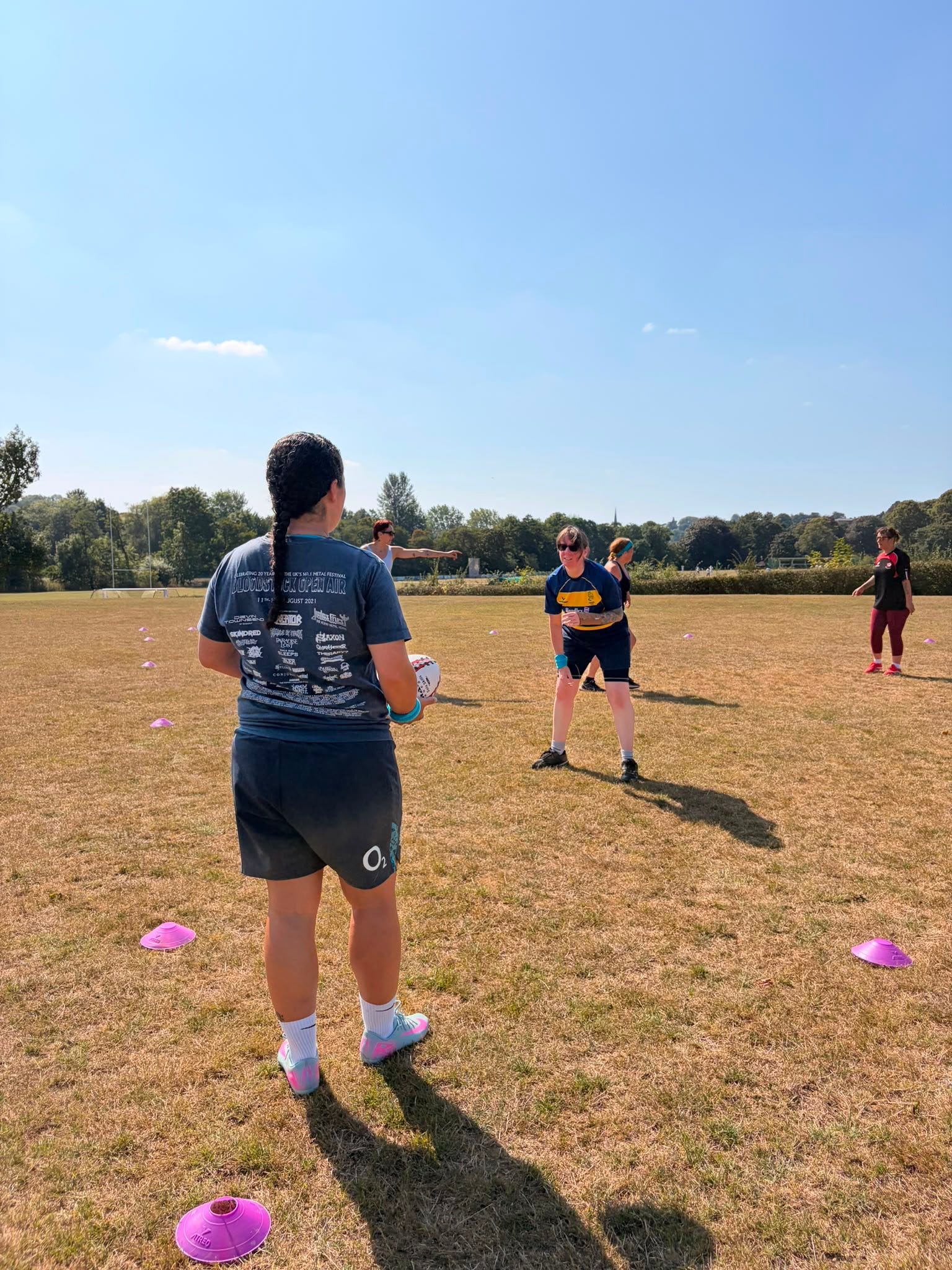
This Summer I coached small groups of adult women, large groups of adult women and children at a Summer camp.
It reminded me of a few lessons.
What to develop your coaching?
What to support me and my work?
Check out the memberships, upgrade your subscription, buy me a coffee or share the article
Lesson 1: Appreciating the different types of coaching
I co-coached at the Summer camp, alongside some of my favourite people. I got the opportunity to have a lot of 1-2-1 interactions with players. I was grateful that my co-coaches gave me the space to do this.
Co-coaching is all about giving space for other people and being thoughtful in our impacts and interactions. I always picture it as one of those solar system models.
Each planet or moon can be a different co-coaching role. They operate relationally to each other, performing rhythms and movements. They move around a larger purpose (players, team, aims of session).
At the camp the other coaches gave space for me to have lots of 1-2-1 interactions with the players. I felt I was like an outer planet or moon circling around activities, observing and then helping to create some impact.
Describing myself as an outer planet or moon does not mean I felt excluded at all. On the contrary, I felt proud that we as a group of coaches had created space for each other to co-coach together. In co-coaching, the inner and outer planets are all important.
It’s easy to downplay the impact lots of 1-2-1 interactions can have. My inner saboteur tried to do this to me. Another coach kicked this thought out of my head. They remarked that they had seen me have those 1-2-1s all week and I had inspired them to try to coach like that.
The reality (and not the inner saboteur voice) is that I love those 1-2-1 coaching moments. Chatting to players, giving them challenges if they want, seeing them take that feedback or mini challenge back into the activity. I love it.
The benefits are huge too. One coach can lead the game and the main interactions and another gets to have 1-2-1 impacts. I spent time asking players if they wanted challenges, how spicy they wanted the challenge and celebrating with them when they completed it. This co-coaching method gets all players feeling involved and engaged.
Lesson 2: When Activities are Planned Right They Flow More
I love session design. It’s easily overcomplicated. You can also too easily let the session try and do too much work, instead of finding balance between activity and coaching interactions.
When you get it right, the session can flow like a river. Players notice it too.

There’s still some turbulence in this river. It’s not calm. The flow of the session shouldn’t remove all challenge moments for players.
Over the Summer I ran a Ready Set Rugby session. There sessions I relaunched where women from different clubs can come and have a training session led by me. The aim is to give women the feel of a rugby camp, the inclusivity of women’s rugby and a supportive learning environment. (PS. If your club wants to host one, drop me a message!)
For that session I planned activities that build the level of complexity with one thematic thread all the way through. The activities linked, so the skills and challenges could transfer from one activity to the next, and build to the final game.
Not an uncommon goal in session design.
This time, it really felt like the session clicked into place. The players noticed it too. They mentioned the transferable qualities of each activity. I loved it when they mentioned it because that meant it not only felt like it was flowing for me, but it also felt the same for them.
This doesn’t mean the players felt the session was easy. It meant they felt the level of the session build and how each activity was built on the last.
There’s often no way to judge whether this will happen before a session. Sometimes you get it just right, sometimes you have to adjust. That’s coaching.
Yet, for me, when you get it right it feels like a river. If it doesn’t feel like a river, I need to make some adjustments. These could be a change in activity, challenge level or a coach-player interaction.
These lessons, have been more reminders. I know these already. However, in the course of a long season or (in my case sometimes) people squashing your self belief through sexist encounters, you can forget. That can end up giving your inner saboteur more oxygen.
If this happens, leaning on a support network is great (we have some set up through this work for coaches/subscribers and women+ coaches, reach out if you want to join). Player feedback is also great, as those are the people directly engaging with your sessions.
What have been your lessons/reminders in coaching recently? Comment below to share yours!
Did you know there’s now coach memberships? There’s 3 tiers for coaches (or anyone who wants to support the work and wants support), there’s also a special tier for clubs and W&Gs sections. There’s a coaching hotline, access to webinar recordings, and monthly mentoring. Memberships start from £5 a month.