


When you play games at training, how do they start and how do they restart?
If you only play a game at the end of training, I would be curious about why and whether your training replicates the feel of a match. However, that is a post for another day.
Your support keeps this work going. Either by sharing the posts, buying me a coffee, buying a membership or getting a paid subscription. Please consider clicking the links to support the work and myself.
Today I’m interested in the different ways a training game can be restarted. First let’s explore when there is a need to restart the game.
When do we restart?
If you only restart a game after a try has been scored, you’re potentially missing out on different scenarios to develop your team. Depending on the aims of the session, you might want to pause and restart the game at different points.
If you only pause when there’s a mistake you miss opportunities to highlight good moments with the players. It potentially risks players fearing your voice or whistle because they know there’s been a mistake.
Natural restarts can happen in your training games but you can also add them in. If you or the players pause the game you can the restart the game with a different scenario.
What restarts can we use?
You can include different restarts and scale the level of difficulty depending on your players.
Scrums:
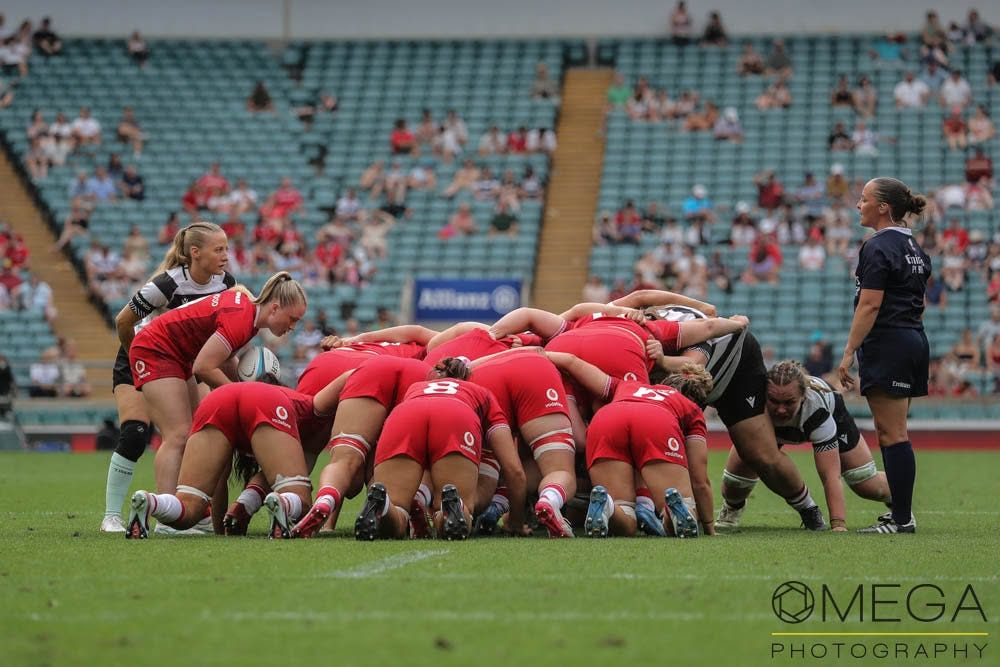
You can vary where the scrums take place on a pitch but also how many players are in the scrum. I like to use 1v1 scrums. This means I can look at people’s individual confidence and body positioning. Returning to the basics, in any contact work, is always worth it.
Lineouts:
As well as changing the location of the lineout, like scrums you can also scale the lift and competition element to suit your team. You can remove or add a lift, change the number of people and whether the defenders can compete.
Goal line drop outs and kick offs:
Kicks are the most common form of restart used in games. Whilst it’s tricky to vary these, I’ll often drop in some questions about where the kick might go or how the receiving team should organise themselves.
How could we give players choice?
I like to include restarts in a way that give players choice. One way to do this is to put a rule into a training game: the team that scores decides what restart to use. As a coach you can veto the idea in case they decide something that is unsafe (15 v 15 person scrum for example!).
You can also print off cards with different restart options on them. Give different cards to each team and they have to use them all. They can use a restart card after they have scored.
This gives players the choice of which restart, includes a variety of scenarios for your team to work on and makes each training game slightly different. It also encourages the teams to score as they get an opportunity to use another card.
Did you know there’s now coach memberships? There’s 3 tiers for coaches (or anyone who wants to support the work and wants support), there’s also a special tier for clubs and W&Gs sections. There’s a coaching hotline, access to webinar recordings, and monthly mentoring. Memberships start from £5 a month.