


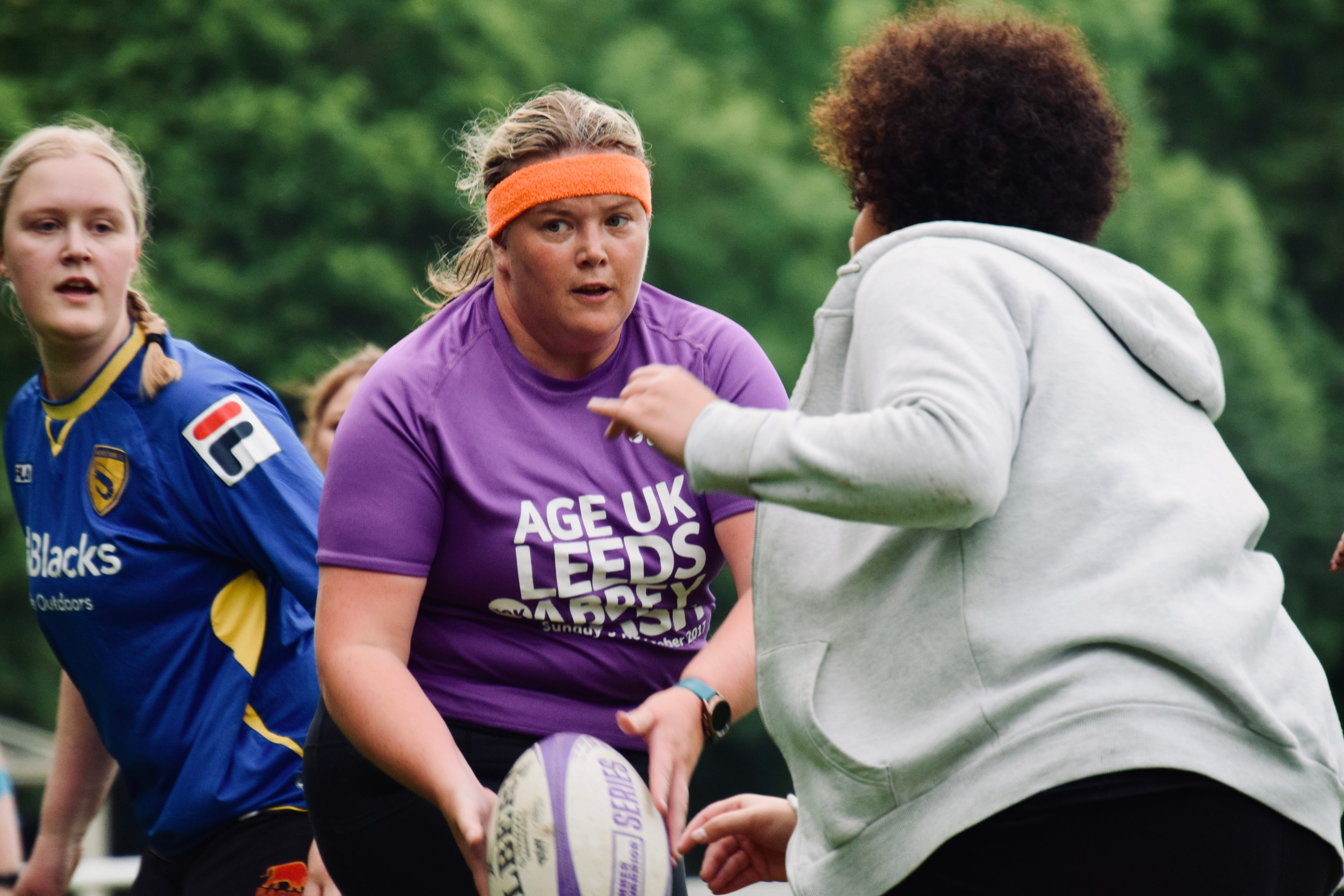
I love headbands. Anyone that’s coached with me or attended one of my sessions will know. I have a few different colours (yellow, pink, blue, orange and striped).
I’m aiming to get a few more added to my kit bag (in case you’re wondering where the latest subscription payment or buy me a coffee money will go soon).
I use headbands in the majority of my sessions. They’re great as they take up less space than bibs. I travel alot doing guest coaching so they work in my kit bag. I also find that clubs already have bibs so if I bring headbands and need to use bibs as well, I can use a mixture of my kit and the clubs kit.
The main argument for headbands is that they get players looking up and scanning for teammates, space and support. However I’ve also heard some an argument against headbands. The common one is that bibs get players looking at the opponent’s body for visual clues (hips turning etc) and that if someone is looking up and scanning they can miss those.
In my experience, players can get tunnel vision and so it’s easier to encourage them to look just ahead at a player’s body and read clues just in front of them (1v1, hips turning etc). It can be harder for them to look ahead and scan.
There is a middle ground. In coaching we don’t have to be in equipment tribes (headbands vs bibs). We can use a range of kit to suit the focus of our session and players.
I often like to use bibs and headbands. When playing contact conditioned games, I’ll often start off by asking players to tuck bibs in their shorts. This creates a tag game and gets the players focused on reading visual clues in defence and making a wrap around a player to grab a bib.
Headbands are inclusive
There’s been numerous times when playing and coaching that I’ve either tried to squeeze into a bib that doesn’t fit or see a player do the same. It doesn’t feel very inclusive to claim we’re a sport for all shapes and sizes yet force people into a bib that doesn’t fit.
Bibs claim to be unisex and one size fits all. Yet this isn’t really the case and the people it harms the most are women and those with a larger frame.
If you are wanting to introduce new people to the sport or retain current players then the sessions need to be inclusive. Training kit matters. No one feels welcome when they have to squeeze into a bib that doesn’t fit and may restrict their movements.
Ways to use headbands
It seems obvious. Headbands can be used to split players into different groups and teams. However, they give me more flexibility than bibs, simply because I can have more colours and more of them.
They take up less space than bibs would in my kit bag. I have a range of colours which means I can split players into small groups. Depending on numbers and the needs of the session, I can use headbands to create 6 groups: yellow, pink, blue, orange, stripes and non headbands. Splitting players up into groups are great for organising small sided games.
You can also use headbands to give out specific rules or conditions. Here’s a way you can condition the defenders using headbands.
Split players into two teams (you can use bibs or headbands)
Give two players headbands (if you’re already using headbands to split teams you need to use a different colour)
Players can wear these headbands on their head or wrist
Teams play touch. Once the ball carrier is touch tackled they must stop and pass the ball backwards to a teammate
When a teammate makes a touch, the two players with headbands must take a knee or drop to the ground until two passes are made by the attackers
For progressions you can scale up the contact:
Progression 1: Add a grab rule (like hugby, not a full tackle but a wrap)
Progression 2: When wrapped the ball carrier now presents the ball on the ground
Progression 3: When the ball carrier presents there is now a contested ruck
The headband rule in this game places a constraint upon the defenders. When the players take a knee for two passes, the remaining defenders have to work together to fill the gaps.
I purchase my headbands from Amazon. They’re a brilliant addition to your coaching bag as they can add versatility to your session design and help give players challenges.
They also ensure training kit doesn’t make people feel uncomfortable or unwelcome by being ill fitting.
PS. This Summer I had a film crew from Buy Me A Coffee accompany me for a few days. The aim was the get a bit of insight into my story as a creator who uses their platform. The way the film crew approached it was to discuss the challenges and joys I have experienced and why I do the work.
The result is a 5 min video that gave me the opportunity to share some struggles and my passion for rugby, coaching and supporting coaches.
The film is now out on YouTube. It would be great if you could give it a watch and a share
Your support, sharing articles, buying coffees or paid subscriptions really do help. This video is proof of that.
Your support keeps this work going. Either by sharing the posts, buying me a coffee, buying a membership or getting a paid subscription. Please consider clicking the links to support the work and myself.